At home
A sheet of paper.
The exercise is printed on a page. You count in your head and guess how high the heel went.
Calf rehab at home
Sensors on the shin, foot, and calf show the heel rise and how hard the calf works, compared with your other leg. Your physiotherapist set the target. Voimeli records the session and shares a short summary.
Sensors
Shin sensor · connected
Calf sensor · connected
Heel rise
32°target 30°
Between visits
A programme is set in the clinic. The work is done in a living room, on a chair, alone. Voimeli measures that work and brings it back to the physio.
At home
The exercise is printed on a page. You count in your head and guess how high the heel went.
At the clinic
Your physio asks how it went. The answer is what you remember on the day of the visit.
With Voimeli
Each rise is measured against the target. Your physio reads what happened, rep by rep.
The app
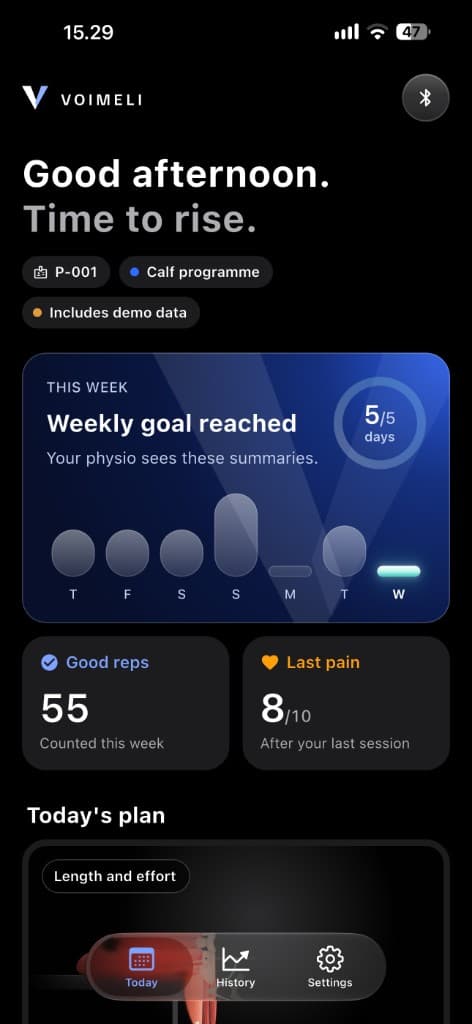
Today
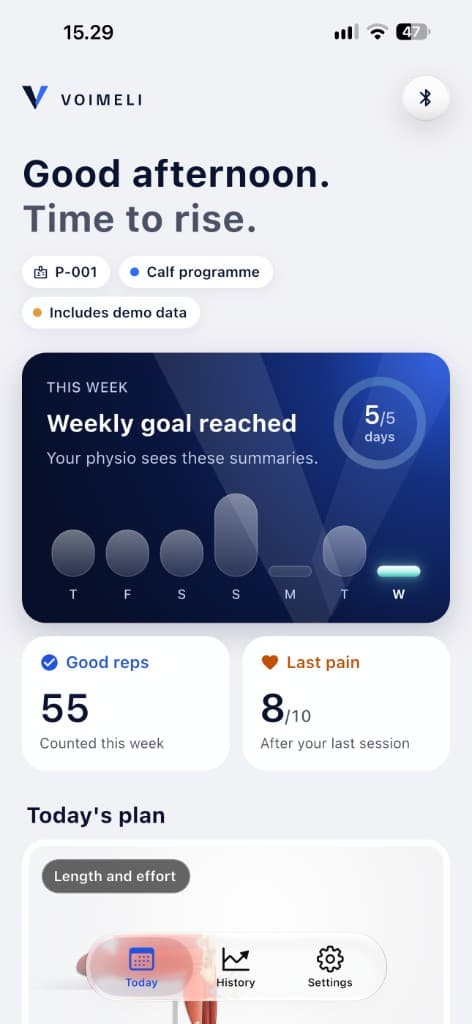
The week sits at the top: the days you exercised, the reps that counted, and the last pain score you entered. Your physio sees these summaries.
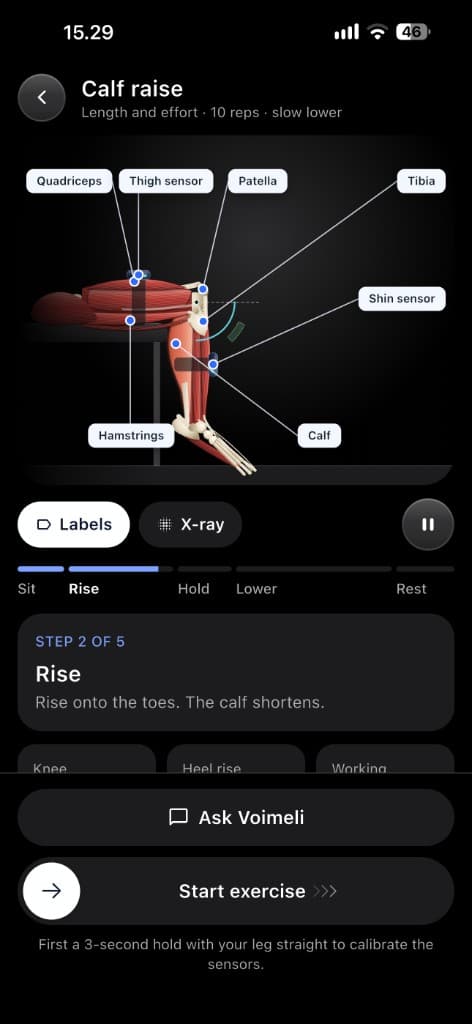
The exercise
The drawing shows where each sensor goes and what the calf does at each step. Sit, rise, hold, lower, rest. Labels and X-ray help you place the pods.
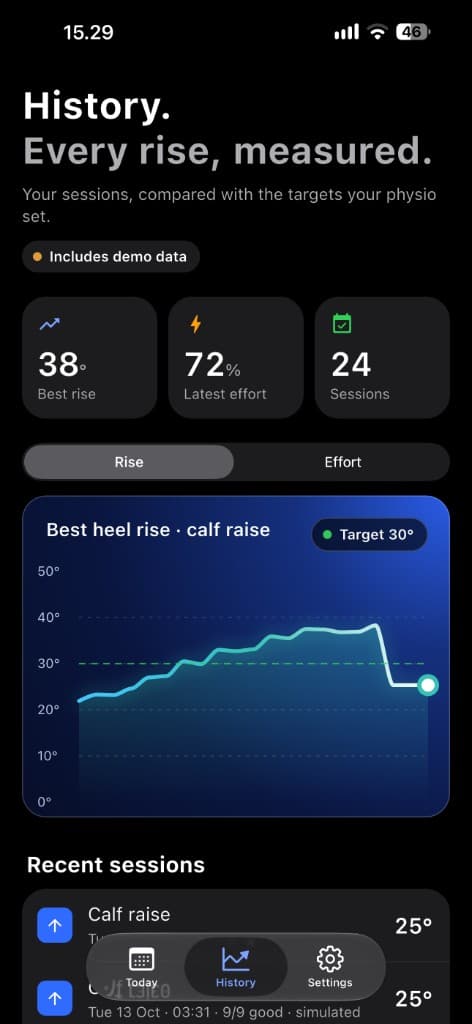
History
Each session sits next to the target your physio set. Rise and effort are kept apart, so you can see one without the other.
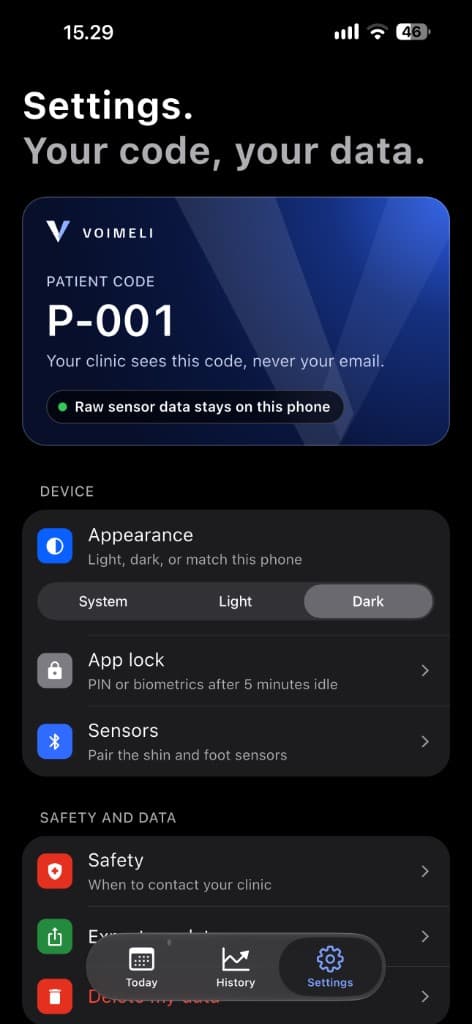
Settings
The clinic sees a patient code, never your email. Raw sensor data stays on this phone. Export or delete your data from here.
Light or dark
Light, dark, or match the phone. The colours mean the same thing in both: blue for this leg, amber for the other leg, green for a counted rep.
Measured
A rep counts when it meets the target your physio set. Three readings decide it.
The shin and foot sensors show the rise, against the target your physio set.
The muscle sensor sits on the calf. The bar shows this leg as a percentage of your other leg, from a short hold earlier the same day.
A counted rep keeps the calf working while the heel comes down, and lowers without dropping it.
Sample figures. Your targets come from your physiotherapist.
Inside the calf
The calf shortens to lift the heel and lengthens to lower it. Pick a rep to see what changes, and why it counts or not.
An illustration of a seated calf raise. Lengths come from a standard adult leg model, not from your own leg.
After the set
You score pain after the session. The clinic sees that score with the summary. Pain of 8 or more, or a red-flag symptom, stops the exercise and points you to your clinic, or to 112.
You enter this
P-017
1 rep did not meet the target.
For physiotherapists
Between visits you can see whether the heel rose to the target you set, whether the calf stayed on while it lengthened, and what pain the patient entered.
Same exercise
The games use the same sensors and the same targets. Rising past the target does not add points.
Your data
The clinic sees a code like P-017.
Only summaries sync.
Export or delete your data at any time.
Questions
No. Voimeli records home exercise and displays it for a physiotherapist to review. It does not diagnose or give medical advice.
Your physiotherapist. How many reps, how high the heel should rise, and how long the lower should take. Voimeli shows those targets and does not change them.
A short summary after each session: the exercise, counted reps, the heel rise next to the target, calf effort compared with your other leg, and the pain score you entered. They see a code such as P-017, not your name.
The seated calf raise, with sensors on the shin, the foot, and the calf. Quadriceps and glutes are the next pattern.
You score pain from 0 to 10 after the session. Pain of 8 or more, or a red-flag symptom, stops the exercise and points you to your clinic, or to 112.